

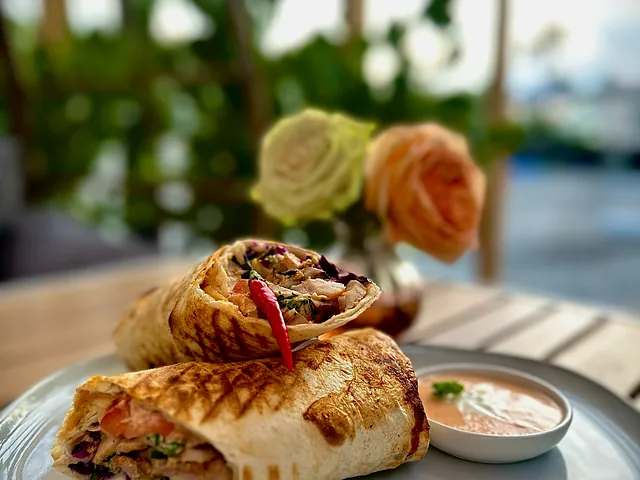
Shawarma looks simple from the front of the counter: a turning column of meat, a blade, a piece of bread. Most of the work happens long before any of that, and most of the mistakes happen in the last thirty seconds.
The stack is the recipe
The spit is built, not filled. Thin slices of marinated meat are layered so that lean and fat alternate all the way up the column; the fat renders downward as it turns and bastes everything under it. A stack that is all lean dries out from the top down, no matter how good the marinade was.
Marinade, and time
A working marinade needs an acid, a fat, and a spice mix with something warm in it. Yoghurt or lemon for the acid, oil for the fat, and a blend along the lines of cumin, coriander, paprika, black pepper, cinnamon or allspice, and garlic. Give it overnight. The spices need the time far more than the meat does.
Heat from the side, not below
The point of the vertical spit is that the heat comes from one side and the meat turns past it. The outer few millimetres crisp, get shaved off, and expose a new surface to do the same thing again. At home, the closest approximation is a hot, dry pan and thin slices cooked in small batches — crowd the pan and the meat steams instead of browning.
Build it in the right order
Sauce goes on the bread first so it does not soak straight through. Then the crisp vegetables, then the meat while it is still hot, then the pickles last so they stay sharp. Wrap it tightly, and give it a moment on the press or in the pan so the seam sets.
On our menu
We serve shawarma with chicken, with beef, or as a mix of both, with lettuce, tomato, cucumbers, pickles, onion and the chef's special sauce.